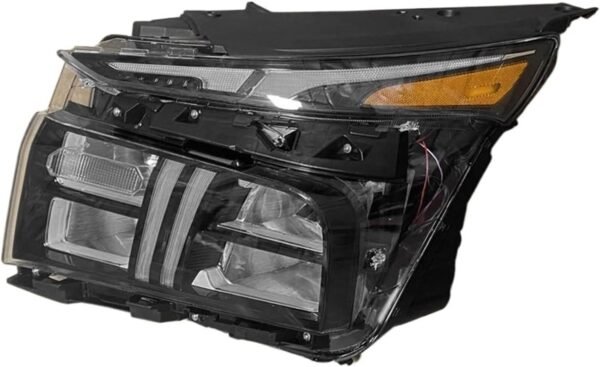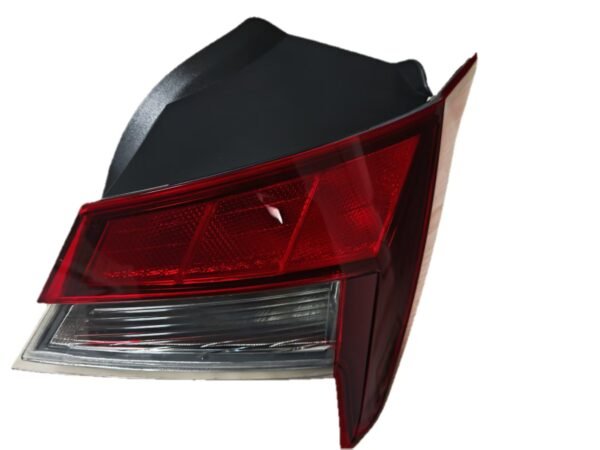
The lighting and signaling system is primarily used for nighttime driving illumination of automobiles and to indicate the vehicle’s driving status, playing a crucial role in ensuring driving safety.
1. External Signal Lights
External signal lights are mainly divided into headlights and taillights, depending on their location.
2. Headlights
Headlights include front turn signals, low beam headlights, high beam headlights, front position lights, daytime running lights, and front fog lights.
3. Taillights
Taillights include high-mounted brake lights, rear position lights, brake lights, rear turn signals, reversing lights, and rear fog lights.
4. Interior Signal Lights
Interior signal lights generally refer to the indicator lights on the instrument panel.
5. Turn Signals
Turn signals are divided into front, rear, and side turn signals. Front turn signals are located on the bumper, side turn signals are located on the exterior rearview mirrors, and rear turn signals are integrated with the rear combination lights. When a car turns, it emits alternating bright and dark flashing signals to indicate whether it is turning left or right, informing other vehicles, pedestrians, and traffic police of its direction of travel. Turn signals are amber in color.
6. Brake Signal Lights Brake signals are located at the rear of the vehicle. Their function is to signal to vehicles or pedestrians behind the vehicle when it brakes to a stop or decelerate, alerting them to the braking action. Brake signals are a bright red and should be clearly visible from 100 meters away.
7. Daytime Running Lights Daytime running lights, also known as daytime running lights, are installed at the front of the vehicle to make it more visible from the front, improving its recognizability. They emit white light using LED technology and are brighter than position lights.
8. Position Lights Position lights, also known as side marker lights, are generally installed on the left and right edges of the front and rear of the vehicle. Front position lights are white, and rear position lights are red.
9. Reversing Lights
When reversing, reversing lights illuminate the road behind the vehicle and warn other vehicles and pedestrians that the vehicle is reversing. All reversing lights are white.
10. Rear Fog Lights
Rear fog lights are red signal lights installed at the rear of the vehicle, brighter than the taillights, used in low-visibility conditions such as fog, rain, or dust to make the vehicle easily visible to other road users behind.
11. Indicator Lights on the Vehicle’s Instrument Panel
Indicator lights on the vehicle’s instrument panel primarily alert the driver to the operating status of various vehicle systems and any existing fault information. They mainly include two categories: information lights and malfunction warning lights. Indicator lights on the vehicle’s instrument panel include brake lights, charging lights, oil pressure lights, coolant temperature lights, airbag lights, ABS lights, engine check lights, fuel lights, front and rear fog light lights, turn signals, high beam lights, and seatbelt lights.