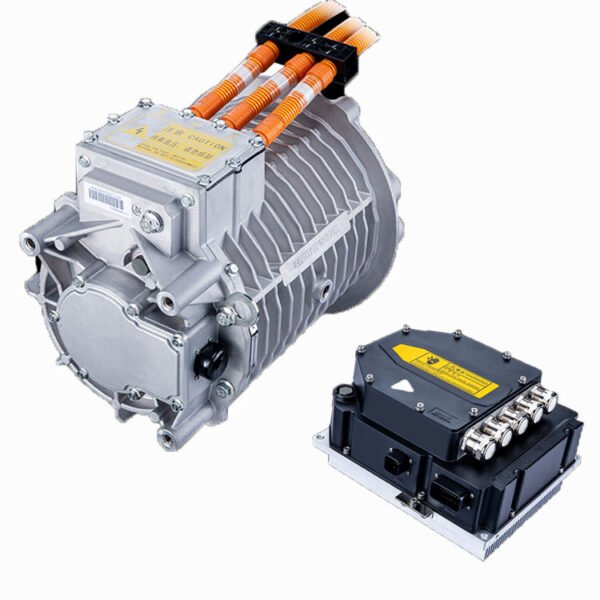
ISG and BSG are only one letter apart, but their fuel-saving effects differ by a whole factor of two. Let’s clarify this today, and you’ll be more knowledgeable than the salesperson when buying a car in the future.
First, we need to understand what a 48-volt mild hybrid actually is. Many people think that as long as a car is labeled as a hybrid, it must be fuel-efficient and advanced. However, a 48-volt mild hybrid is not in the same league as a true plug-in hybrid.
The core logic of the 48-volt system is quite simple. It’s an additional 48-volt small electrical system installed on a traditional fuel vehicle. It can’t drive purely on electricity, nor can it significantly replace the engine. What it can do is help you save a bit of fuel during the most fuel-consuming moments of the engine.
So, how much can it help? Under a comprehensive driving condition, it can save about 5% to 15% of fuel. It may not sound like much, but over a year, it can save you several hundred to several thousand yuan in fuel costs.
Here’s the key point: Why do some 48-volt mild hybrid vehicles save more fuel while others seem to save none at all? The answer lies in the position of the motor. BSG stands for Belt Starter Generator, as the name suggests, it is connected to the front of the engine via a belt.
The advantage of this solution is its low cost, simple structure, and ease of modification. Many manufacturers prefer BSG because it’s cheap and can be called a mild hybrid just by being installed, allowing them to sell for several thousand yuan more. However, the problem lies in this belt. The efficiency of belt transmission has a ceiling, and there is significant energy loss during the transmission process.
The auxiliary torque that a BSG motor can output is at most 20 to 30 Newton-meters. In plain terms, when you step on the accelerator, the assistance provided by the BSG motor is very limited. In contrast, the ISG motor is completely different. ISG stands for Integrated Starter Generator.
This motor is not installed outside the engine but is directly integrated between the engine and the transmission, connected to the engine on the same axis. What does this mean? There is no belt, no intermediate loss, and the motor’s power can be transmitted directly and fully. The auxiliary torque of an ISG motor can reach 100 Newton-meters or even higher, which is 3 to 4 times that of a BSG.
In scenarios that consume the most fuel, such as starting acceleration, low-speed following, and frequent braking, the ISG can significantly intervene and help the engine share the load. This is the true meaning of fuel saving. So, when both are labeled as 48-volt mild hybrids, a car with a BSG is just a manufacturer sticking a fancy-sounding label at the lowest cost, while a car with an ISG is truly helping you save money.
Next time you go to buy a car, just ask the salesperson one question: Is this mild hybrid a BSG or an ISG? If they hesitate and can’t answer, you can just walk away.
Remember to follow me. In the next episode, we’ll continue to talk about new energy vehicles and learn more interesting car knowledge.